What Are Carbon Fibre Rollers? Types, Benefits and Applications
Carbon fibre rollers are widely used in modern industrial equipment where lightweight construction, high stiffness, and reliable performance are important. Compared with traditional metal rollers, carbon fibre rollers can reduce rotating mass while maintaining the structural strength required for many industrial processes. They are particularly useful in high-speed machinery and applications that require precise material handling.
In this article, we will explore what carbon fibre rollers are, their main types, key benefits, and common industrial applications.
What Are Carbon Fibre Rollers?
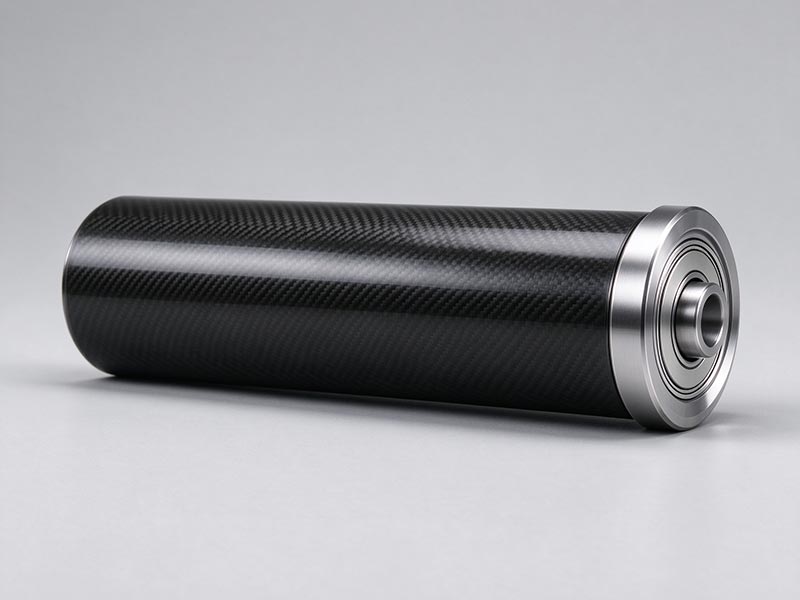
Carbon fibre rollers are cylindrical components manufactured using carbon fibre reinforced polymer (CFRP) materials. They typically consist of carbon fibre layers combined with a resin matrix, which forms a strong and lightweight composite structure.
Depending on the application, a carbon fibre roller may feature a hollow shaft, a customized outer diameter, different surface finishes, and metal end fittings or mounting components. The design can be adjusted to meet specific requirements for length, stiffness, rotational speed, and load capacity.
Unlike conventional steel or aluminum rollers, carbon fibre rollers offer a high strength-to-weight ratio. This makes them suitable for machinery where reducing the weight of rotating components can improve operating efficiency and responsiveness.
Types of Carbon Fibre Rollers
Carbon fibre rollers are available in different designs to meet the requirements of various industrial processes.
1. Standard Carbon Fibre Rollers
Standard carbon fibre rollers are designed for general industrial applications. They provide a lightweight alternative to conventional metal rollers and can be manufactured in different lengths and diameters.
They are commonly considered for equipment that requires reduced rotating mass and reliable mechanical performance.
2. High-Speed Carbon Fibre Rollers
High-speed carbon fibre rollers are designed for machinery operating at elevated rotational speeds. Their lightweight construction can reduce inertia, making acceleration and deceleration more efficient.
Proper balancing, dimensional accuracy, and structural design are essential for these rollers to operate safely and consistently at high speeds.
3. Customized Carbon Fibre Rollers
Customized carbon fibre rollers are manufactured according to specific equipment requirements. Customers may specify the roller length, diameter, wall thickness, surface finish, end fittings, and other design parameters.
Custom designs are particularly useful when replacing existing metal rollers or integrating rollers into specialized production lines.
4. Carbon Fibre Rollers with Functional Surface Finishes
Some applications require additional surface treatments or coatings to achieve particular friction, wear, or material-handling characteristics. Depending on the operating environment, the roller surface can be designed to meet specific process requirements.
The appropriate finish should be selected according to the materials being handled and the working conditions.
Key Benefits of Carbon Fibre Rollers
Carbon fibre rollers offer several advantages that make them an attractive option for industrial machinery.
Lightweight Construction
One of the main advantages of carbon fibre is its low density compared with steel. A properly designed carbon fibre roller can significantly reduce component weight, helping lower the inertia of rotating systems.
This can be beneficial in high-speed production lines and applications involving frequent starts and stops.
High Stiffness and Strength
Carbon fibre composites can provide high stiffness and strength relative to their weight. With suitable fibre orientation and structural design, rollers can be engineered to meet specific requirements for deflection control and mechanical performance.
Actual performance depends on the materials, manufacturing process, dimensions, and loading conditions.
Improved Dynamic Performance
The reduced mass of carbon fibre rollers can help machinery accelerate and decelerate more quickly. In suitable applications, this may support higher operating speeds, improved process control, and reduced energy consumption associated with rotating components.
The overall results depend on the complete machine design and operating conditions.
Corrosion Resistance
Unlike ordinary steel, carbon fibre composite materials do not rust. This can make them suitable for certain environments where moisture or corrosive substances are present.
However, resin selection, metal fittings, coatings, and chemical compatibility should be evaluated before choosing a roller for demanding environments.
Flexible Design Options
Carbon fibre rollers can be manufactured in various dimensions and configurations. Their composite structure allows engineers to adjust fibre orientation and wall thickness to balance stiffness, weight, and other performance requirements.
This flexibility makes them suitable for specialized equipment and customized production systems.
Common Applications of Carbon Fibre Rollers
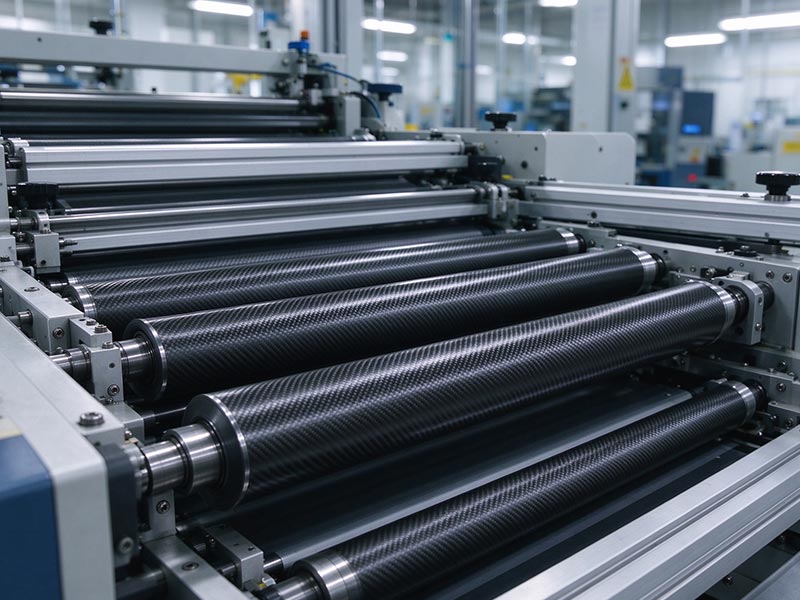
Carbon fibre rollers are used in industries where lightweight components and effective material handling are important.
Film and plastic processing: Used in suitable web-handling systems to guide and support thin films during production and processing.
Printing and packaging: Can be integrated into machinery where lightweight rotating components support material movement and process efficiency.
Paper manufacturing: May be used in selected paper-processing and converting equipment, depending on roller dimensions and load requirements.
Textile production: Suitable for certain textile machinery that requires controlled material feeding and lightweight roller structures.
Composite manufacturing: Can support the handling of films, fabrics, and other materials used in composite production.
Industrial automation: May be applied in specialized machinery where reduced rotating inertia and customized roller designs are beneficial.
The exact suitability of a carbon fibre roller depends on the process, material characteristics, operating speed, load, and installation requirements.
How to Choose the Right Carbon Fibre Roller
Selecting the right carbon fibre roller requires careful consideration of the application.
First, determine the required roller diameter, length, and maximum load. These dimensions influence the roller’s stiffness, deflection, and overall performance.
Second, consider the operating speed. High-speed applications may require precise dynamic balancing and strict manufacturing tolerances.
Third, evaluate the working environment, including temperature, humidity, chemical exposure, and potential surface wear. These factors affect material selection and service life.
Finally, discuss customization options with the manufacturer. Providing detailed equipment specifications can help ensure that the roller meets the mechanical and operational requirements of the production line.
Do you need to replace your current rollers for improved Productivity?
Contact SHUNYI now to learn more about carbon fiber rollers!
Conclusion
Carbon fibre rollers offer a lightweight and versatile alternative to traditional metal rollers in many industrial applications. Their high strength-to-weight ratio, design flexibility, and potential for improved dynamic performance make them valuable components in modern manufacturing equipment.
From film processing and printing to textile production and industrial automation, carbon fibre rollers can help meet the demands of specialized machinery. By selecting the right materials, dimensions, surface finish, and structural design, businesses can find a roller solution suited to their production needs.
If you are looking for a customized carbon fibre roller, working with an experienced manufacturer can help you determine the appropriate specifications for your equipment and application.
