
Common Causes of Film Wrinkles and How Carbon Fibre Rollers Help Solve Them
Film wrinkles are among the most common problems encountered in blown film and bag making operations. Although wrinkles may seem like a minor defect, they can lead to poor product appearance, increased scrap rates, and lower production efficiency. In severe cases, wrinkles may affect sealing quality and even result in customer complaints. As production lines continue to operate at higher speeds, maintaining stable web handling becomes increasingly important. Understanding the causes of wrinkles and selecting suitable rollers can significantly improve product quality and machine performance.
Uneven Web Tension
Unstable tension is one of the leading causes of wrinkles during film processing. When tension varies across the width of the material, some areas are stretched more than others, causing the web to deform and eventually form wrinkles. Tension fluctuations may be caused by worn bearings, poor tension control systems, or excessive roller inertia. Maintaining consistent tension throughout the production process is essential for achieving smooth and wrinkle-free film transportation.
Roller Deflection
Roller deflection refers to the slight bending of a roller when it is subjected to load. This issue becomes more noticeable when processing wide films or using long rollers. Excessive deflection creates uneven pressure distribution across the web, which can result in edge wrinkles and unstable tracking. Traditional steel rollers are more susceptible to this problem because of their weight. Using rollers with higher rigidity helps maintain consistent contact and improves overall web stability.
Vibration During High-Speed Operation
As machine speed increases, vibration becomes another major factor affecting film quality. Heavy rollers generate larger rotational forces, making the system more sensitive to imbalance. Excessive vibration can cause film flutter, unstable tension, and poor winding quality. These problems are particularly common in high-speed blown film lines. Proper dynamic balancing and lightweight roller construction play a critical role in reducing vibration and maintaining smooth operation.
How Carbon Fibre Rollers Help
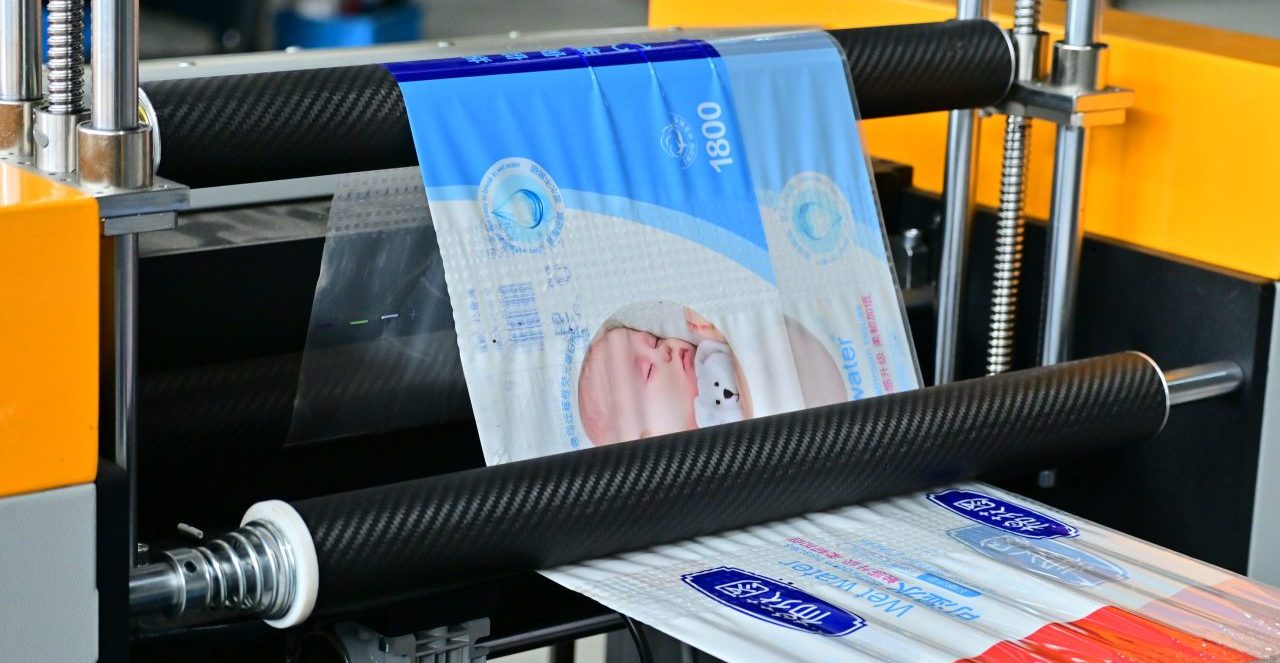
Carbon fibre rollers offer significant advantages compared with conventional steel rollers. Their lightweight construction reduces rotational inertia, allowing the machine to accelerate and decelerate more smoothly. At the same time, carbon fibre materials provide excellent rigidity, which helps minimize roller deflection and improve tension uniformity. Because of their superior dynamic performance, carbon fibre rollers can effectively reduce vibration and maintain stable web transport, making them especially suitable for modern high-speed film processing applications.
Conclusion
Film wrinkles are usually caused by a combination of tension variations, roller deflection, vibration, and mechanical issues. As production requirements become more demanding, conventional rollers may struggle to maintain the necessary stability. Carbon fibre rollers provide a practical solution by offering lower weight, higher rigidity, and better dynamic performance. For manufacturers looking to improve product quality and reduce production losses, upgrading to carbon fibre rollers can be an effective long-term investment.
